Journal · Painting
Reveries in Fracture: The Abstract Reconstructions of Afshin Naghouni
At King's Place, London — opening 11 October 2026
An Inevitable Calling
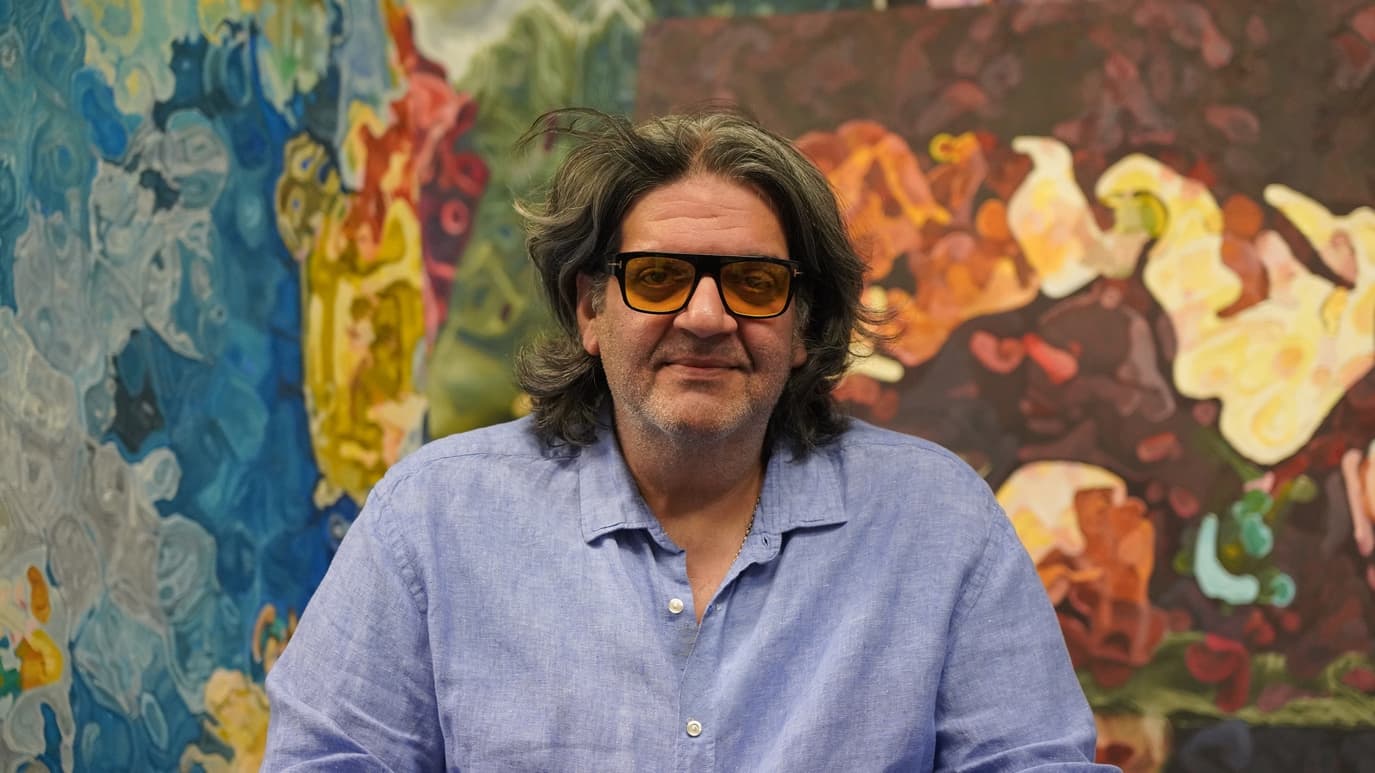
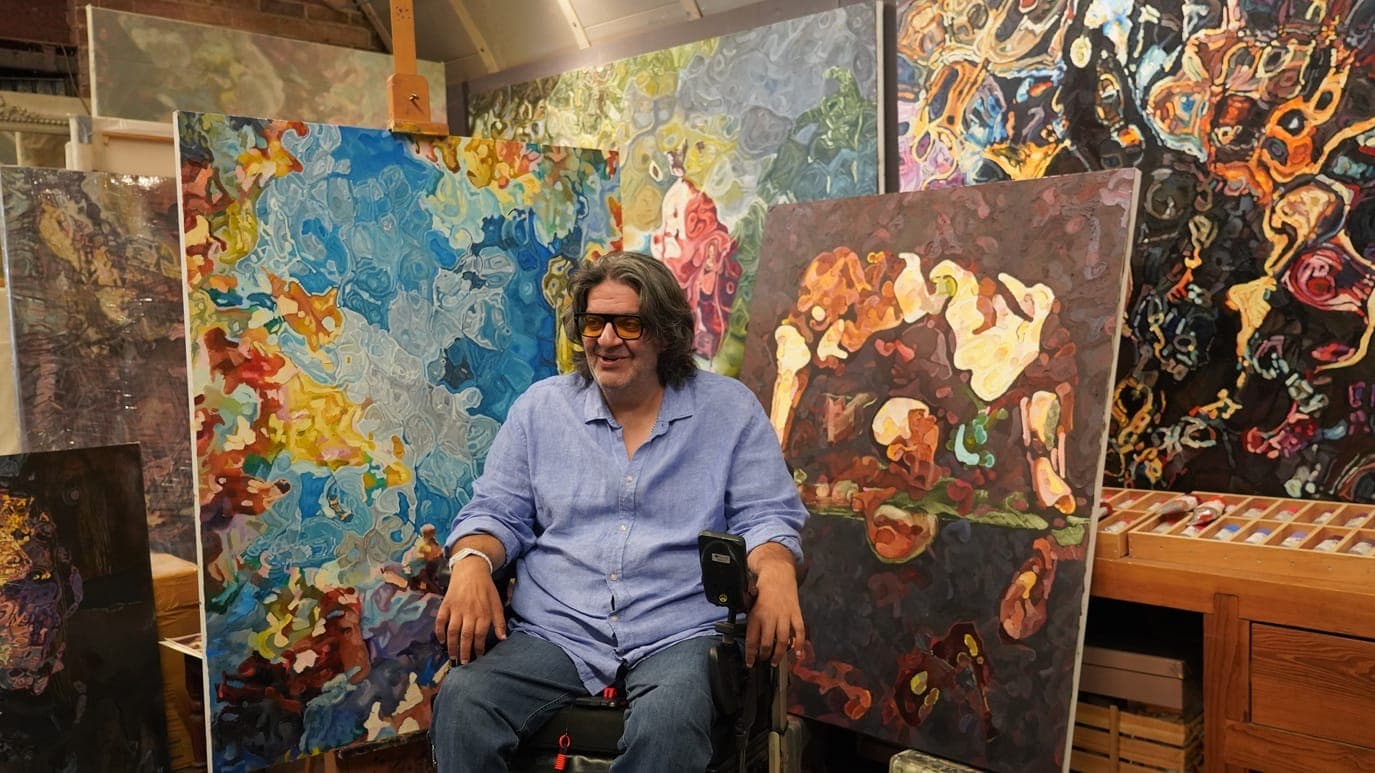
To encounter the work of Afshin Naghouni is to step into a space where the past is not preserved, but actively remade. For the Iranian-born, London-based visual artist, painting has never been a choice; it has been an inevitability. "I started painting from childhood attending all painting classes from 10 years old," Naghouni recalls. "I always loved painting throughout my life. Couldn't imagine myself doing anything else. I think it's — it's an old cliché, but that's true."
Having moved from Iran to the United Kingdom in 1996, Naghouni has built a career defined by rigorous technical skill and conceptual depth. Yet, in recent years, his practice has undergone a profound evolution, shifting away from representational styles toward a deeply atmospheric and evocative form of abstraction. This journey, which began in earnest around 2020 and 2021, has culminated in his highly anticipated upcoming exhibition, Reveries in Fracture, set to open at King's Place, London, on the 11th of October 2026.
The Stylistic Evolution: Balancing Concept and Form
At the heart of Naghouni's artistic practice lies a fundamental tension — a constant negotiation between the literal and the expressive. "My main struggle has always been to find the balance between concept and form," Naghouni explains.
For years, this struggle animated his work, but as time went on, his focus naturally gravitated toward the formal, physical qualities of paint and canvas. "The more I found myself moving towards a form and formal qualities of painting, the more I found myself moving more towards abstraction," he reflects. This transition was not a sudden departure, but a gradual and organic unfolding over the last few years. Abstraction became a way for Naghouni to peel back the literal layers of his subjects, allowing the raw emotional core of his paintings to speak directly to the viewer.
Reconstructing the Old Masters: Nostalgia and the Concrete Past
In Reveries in Fracture, Naghouni applies his abstract sensibility to a specific, culturally loaded source material: the masterpieces of Western art history. By using the "Old Masters" as his starting point, Naghouni engages with what society typically deems concrete, historical, and authoritative.
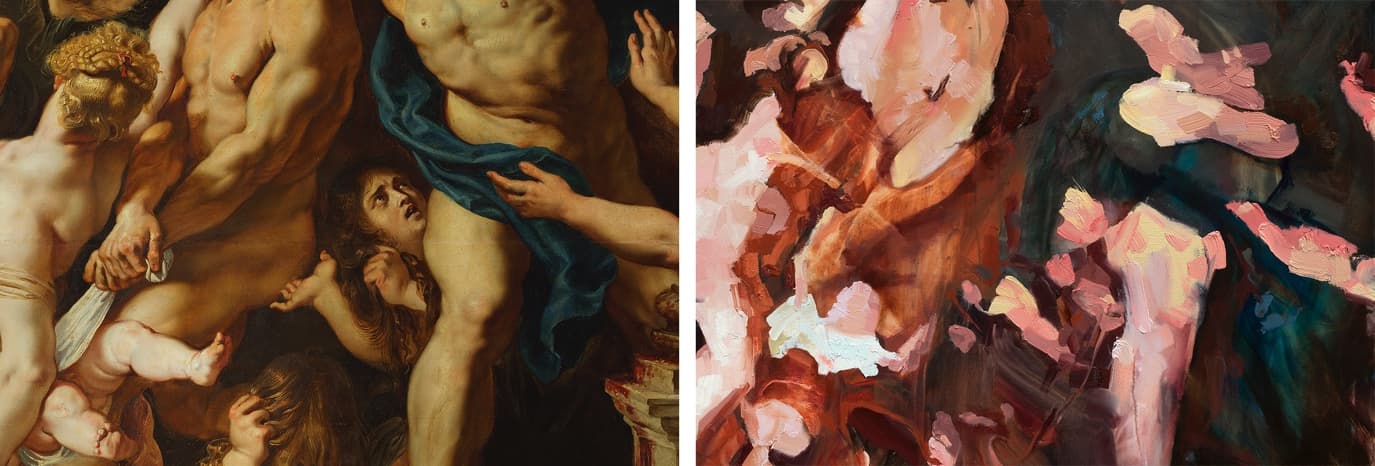
However, Naghouni's intent is not to pay simple homage or to reinterpret these classic works. Instead, he uses them to investigate the unstable nature of collective memory and nostalgia. As Naghouni notes:
"My idea of reconstructing old masters in abstract is got to do with memory and nostalgia. I'm using old masters as the past, as the history, as the — you know — what's supposed to be the concrete. But we don't receive history as a series of facts. We receive history in stories, images, you know, and that sort of thing. By the time they reach us, we don't know how much of it is left, you know, how much of it, you know, has changed — you know, it's a reconstructed kind of a memory that we have never experienced ourselves."
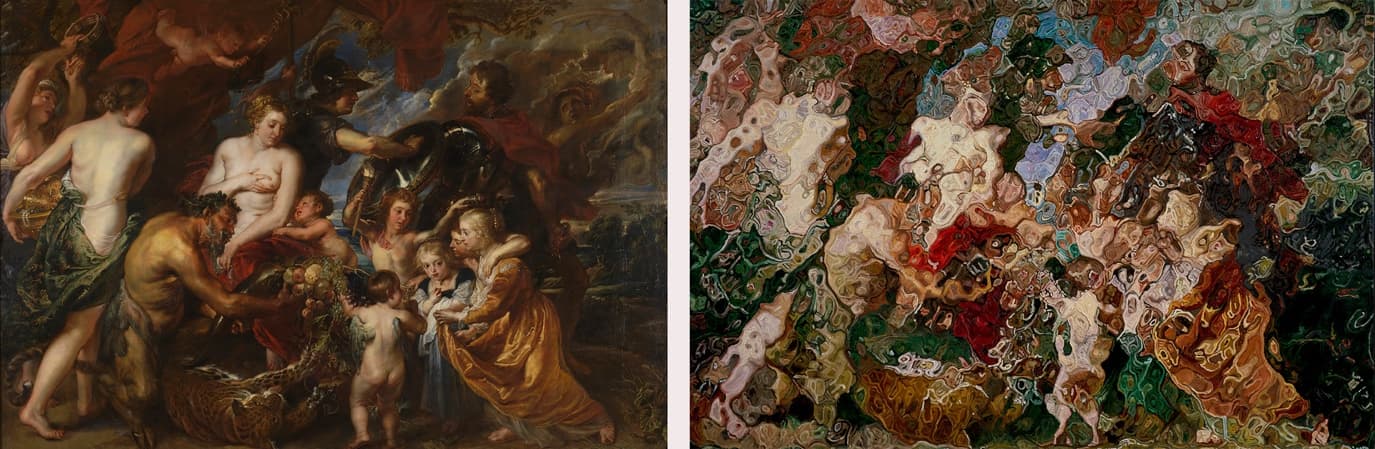
The exhibition's official statement echoes this philosophy, noting that Reveries in Fracture "examines what remains of an image once the certainty of its narrative begins to dissolve." The paintings do not seek to preserve or reinterpret their historical sources. Instead, "abstraction becomes a means of releasing them from the authority of inherited meanings, allowing their emotional force to persist while their stories become increasingly unstable."
Nostalgia, in Naghouni's view, is rarely directed at history as it was actually lived. More often, it is directed toward "histories reconstructed through memory, culture and desire." Through generations of reproduction, repetition, and reinterpretation, these historical images "gradually acquire an authority that often exceeds historical reality, becoming repositories of collective longing rather than records of the past."
The Unstable Territory: From Recognition to Perception
When standing before Naghouni's canvases, the viewer enters a fluid realm where the secure boundaries of history dissolve. The artist places us in the unstable territory between recognition and invention, where the concrete memories we associate with the Old Masters begin to blur and shift. Instead of identifying a static, historic scene, we are forced to look deeper. This deliberate loosening of the relationship between image and narrative shifts our attention away from recognition and entirely towards perception itself. On these canvases, figures emerge and recede like memories fading in and out of focus, meanings remain provisional, and certainty gives way to a profound ambiguity.
In this conceptual space, abstraction functions not as a rejection of representation, but as a direct challenge to its authority. By dissolving the inherited, fixed narratives of these classical works, Naghouni liberates them, inviting new associations to emerge — associations shaped by our own memory, imagination, and contemporary experience. The past is no longer presented as a complete or recoverable artifact. Instead, Reveries in Fracture shows that every act of remembering is inherently an act of reconstruction. Rather than searching for a story to explain the canvas, we are left to encounter the raw emotional and psychological residue that survives once the narrative has fallen away. The work ultimately reveals that the past is not a distant, finished monument, but a fluid creation of the present, where emotion will always precede explanation.
A Synesthetic Collaboration: The King's Place Exhibition
The exhibition at King's Place is set to be a landmark multi-sensory event, bridging the visual arts with contemporary music. On the opening night of the 11th of October 2026, the exhibition will feature a live performance by the London Symphonya.
The music, composed by Amir Konjani, was directly inspired by Naghouni's paintings. The performance will create a synesthetic dialogue in which the visual rhythms of Naghouni's abstract reconstructions find their auditory counterpart. Following the concert, the performance hall doors will open directly into the gallery space, leading the audience from the musical performance straight into the exhibition of the paintings. This seamless flow from the concert hall to the exhibition room mirrors the transition from auditory abstraction to visual abstraction, offering a holistic immersion into Naghouni's creative universe.
What Remains in the Fracture
Afshin Naghouni's Reveries in Fracture represents a bold stylistic leap that successfully bridges his lifelong devotion to painting with a deep, philosophical inquiry into the nature of history and memory. By fragmenting the familiar structures of the Old Masters, Naghouni doesn't just dismantle the past — he reconstructs it in the image of our contemporary longing, reminding us that memory is never static, and that the emotional truth of an image often lies in what remains after the story is gone.
Keep reading
Related Articles
“Create your free Artist Page, showcase your work, share events, follow grants and open calls, and join Artistivo's international art community.”
